


The daily reality of managing password security has turned into a massive cognitive tax for business owners and teams alike. Every single day, we are forced to navigate an increasingly complicated web of requirements—mixes of uppercase letters, numbers, symbols, and strict character minimums—while strictly adhering to the golden rule of cybersecurity: never repeat a password across multiple accounts. For a fast-moving office, this constant cycle of generating, updating, and typing in 16-digit strings creates serious operational friction, leading to “security fatigue” where team members inevitably look for shortcuts just to get their work done.
To cope with this chaos, many of us have turned to popular software-based password managers like LastPass or 1Password. These vaults are incredibly convenient because they auto-generate strong passwords and sync across your devices, which is a massive step up from writing credentials on sticky notes. However, they aren’t without their downsides. Relying entirely on a cloud-based software vault means you still have to remember a complex master password, navigate the occasional syncing glitch, and face the reality that software platforms remain high-value targets for sophisticated cyberattacks.
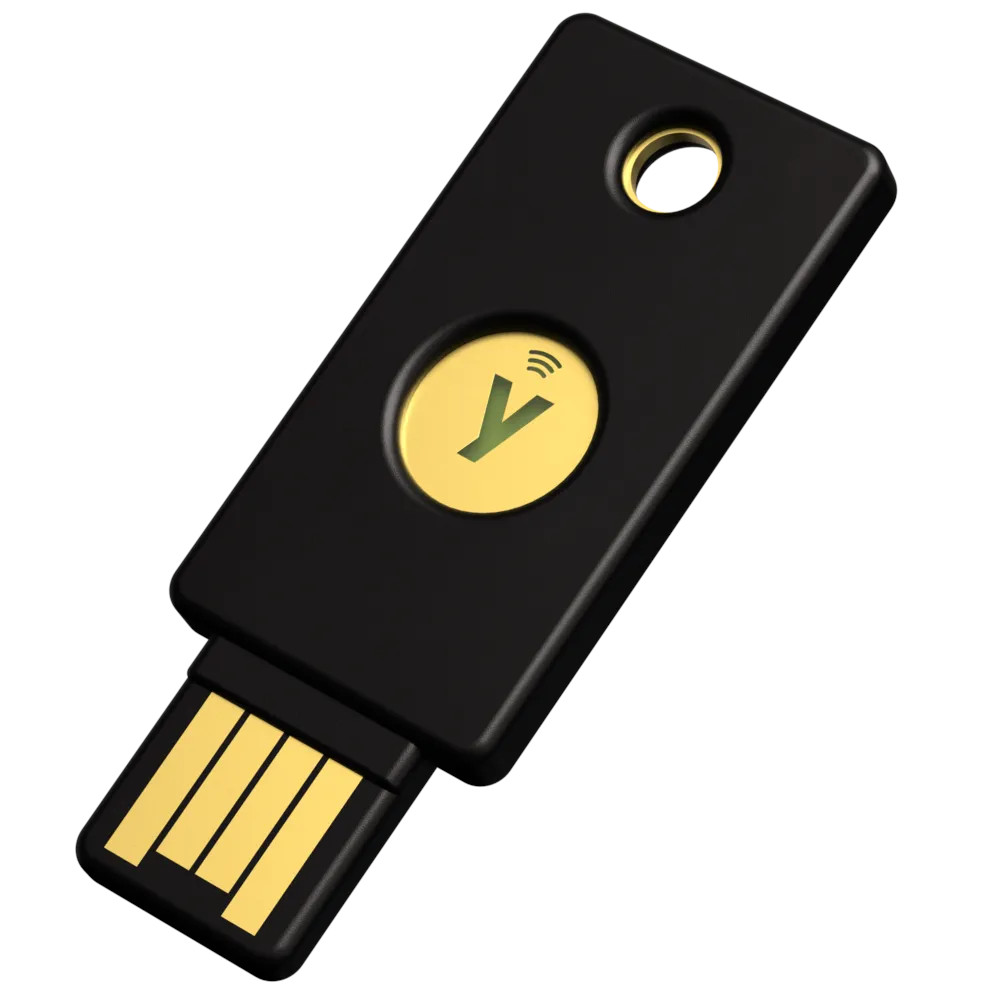
This is exactly where physical hardware keys, like YubiKeys, completely change the game by outshining software vaults in both security and pure simplicity. Instead of opening an app, copying a 16-digit code, and pasting it before the timer runs out, a hardware key allows you to authenticate your identity with a single physical tap on your device. It keeps up with the ultimate promise of software tools—frictionless access—while providing un-phishable, military-grade hardware protection that no cloud-based software can match. It is the closest we have ever come to a truly “passwordless” workflow, shifting the burden of security off your brain and onto a reliable piece of physical tech.